Botched Permanent Makeup: Your Options to Fix or Remove It (2026)

Botched permanent makeup can almost always be improved. Whether the problem is brows that healed too dark, eyeliner that's uneven, or microbladed strokes that have blurred or migrated, the honest routes are partial removal to reshape, full removal to start over, or colour-correction — decided case by case. Laser is the mainstay, saline is used where darkening is a risk, and none of it happens overnight. Most people end up in a better place than they fear.
If you found this page, you're probably staring in the mirror at something you can't stop seeing. Take a breath: this is fixable in the large majority of cases, and rushing into a same-day cover-up is usually the wrong move. Botched permanent makeup is cosmetic tattooing — on the brows, eyeliner or lips — that has healed too dark, the wrong shape or colour, asymmetric, migrated, blurred, or badly placed. This guide walks the honest decision tree from the directory's seat: across the 5,700 clinics we track in 1,043 cities (as of July 2026), we don't perform removal or corrections and we don't sell either method — so we can tell you when each route is the wrong one.
This is a spoke of our permanent makeup removal pillar; for the brow-stroke-specific version, see microblading removal.
Key Takeaways
- "Botched" has several flavours — too dark, wrong shape or colour, asymmetry, migration or blurring, wrong placement — and the right fix depends on which one you have.
- Three honest routes: partial removal to reshape, full removal to start over, or colour-correction tattooing. See the comparison table below.
- Colour-correction can make future removal harder — it adds more pigment over the old — so treat it cautiously and ask about the removal trade-off first.
- Laser is the mainstay; saline steps in where darkening is a risk, because cosmetic pigments can darken under a laser (paradoxical darkening).
- You can't fix it overnight. Removal takes multiple sessions spaced ~6–8 weeks apart, and any re-do comes after that — plan in months.
- A test patch and a corrective specialist come first. Most cases improve; a calm, in-person assessment beats a panic decision every time.
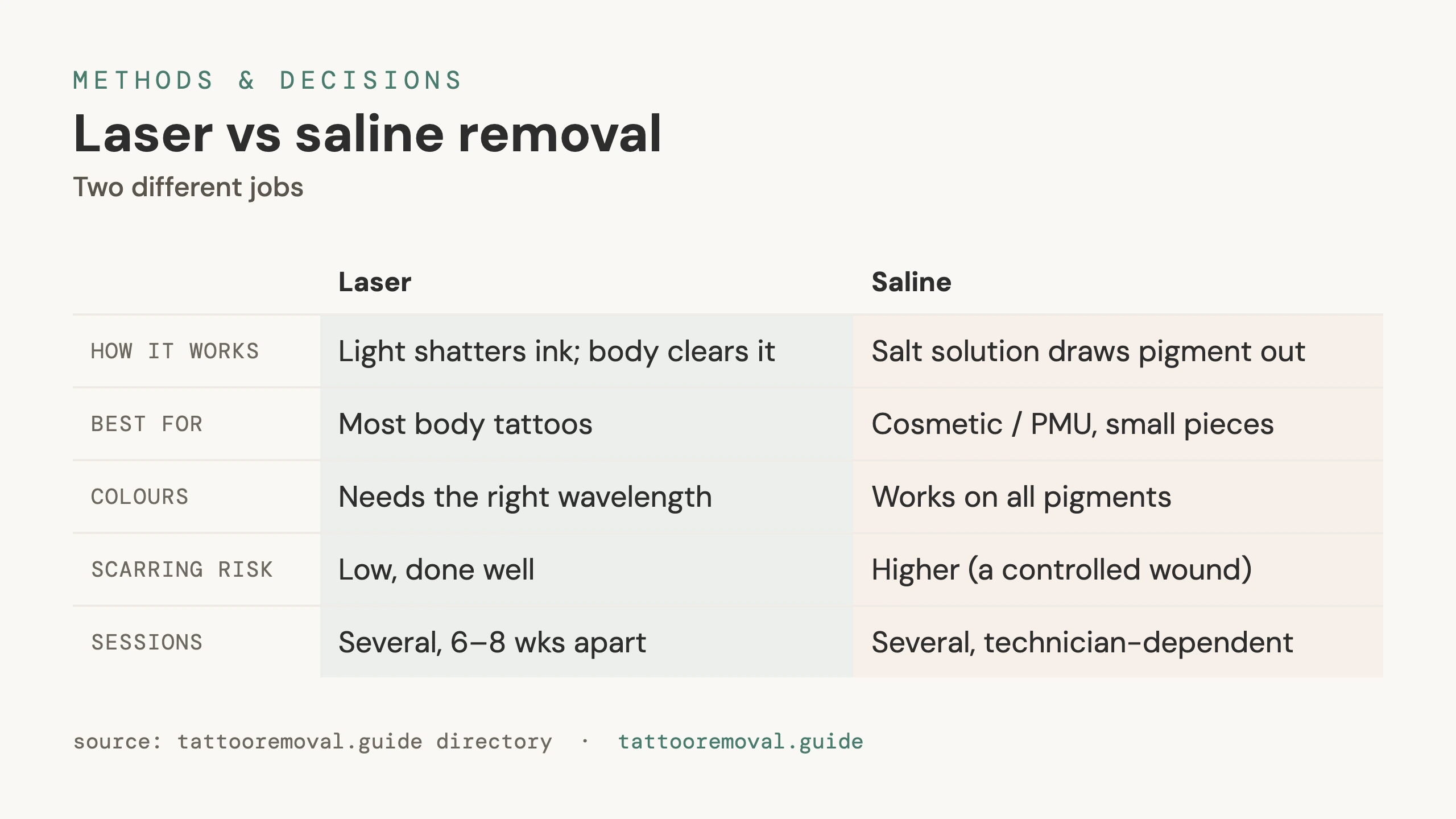 Saline and laser are the two main routes to correct or remove botched permanent makeup.
What actually counts as "botched"?
Not every result you dislike is truly botched, and naming the specific problem is the first step to fixing the right thing. Botched permanent makeup generally means one or more of: pigment that healed too dark or too warm; the wrong shape or an unflattering design; a colour that shifted (brows going grey, blue or orange as they age); visible asymmetry between the two sides; pigment that has migrated or blurred beyond its intended outline; or work placed too high, too low or off-centre.
Each of these points to a different route. A shape that's close but slightly heavy may only need partial lightening. A colour that has turned the wrong tone, or brows placed in the wrong spot entirely, often calls for full removal and a fresh start. Blurred, migrated pigment — common with older microblading — rarely re-does well over the top, so removal usually leads. The point is that "fix it" isn't one decision; it's a diagnosis followed by the route that matches. That's also why an experienced corrective eye matters more than any single technique.
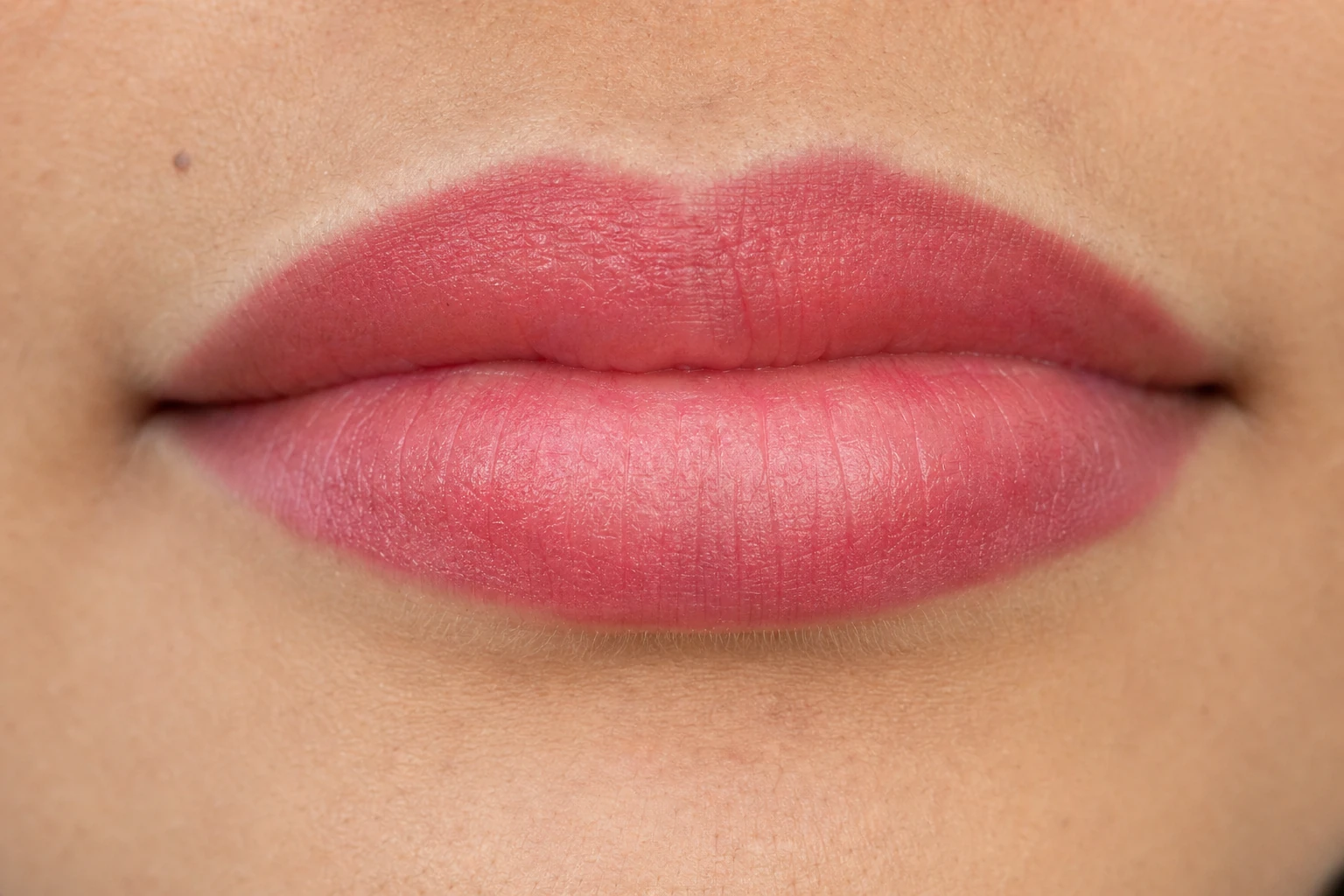 Cosmetic (permanent-makeup) tattooing on the face.
The honest decision tree: fix or remove?
Here's the part single-service studios rarely lay out plainly, because most of them sell one answer. There are three legitimate routes, and they trade off against each other.
| Route | What it is | Pros | Cons | Makes future removal harder? |
|---|---|---|---|---|
| Partial removal (reshape) | Laser or saline lightens selected areas to soften colour, thin a heavy shape, or even out asymmetry — without clearing everything | Keeps usable work; less time and cost than full clearance; can be enough on its own | Won't fix wrong colour or badly migrated pigment; still multiple sessions | No — it reduces pigment load |
| Full removal (start over) | Laser (mainstay) or saline clears the pigment across a course of sessions so a corrective artist works on a clean canvas | Best for wrong colour, wrong placement, or blurred/migrated work; cleanest re-do | Longest and priciest route; re-do only after healing | No — it removes the pigment |
| Colour-correction / camouflage | A corrective pigment is tattooed over the existing work to neutralise or cover the wrong tone | Fast visible change; no removal wait; can mask a colour problem | Controversial; adds more ink; can look off as it ages; doesn't fix shape or placement | Yes — it adds pigment over the old, which can complicate later laser removal |
A candid flag on that last row: colour-correction tattooing over botched PMU is controversial precisely because it adds more pigment — often iron-oxide and titanium-dioxide-based — on top of what's already there. That can lengthen or complicate any future laser removal and, in some cases, raise the paradoxical-darkening risk. It has a place, especially for a colour-shift you want masked quickly, but it is not a neutral "just cover it" move. If there's any chance you'll want the area fully removed later, weigh that before you layer.
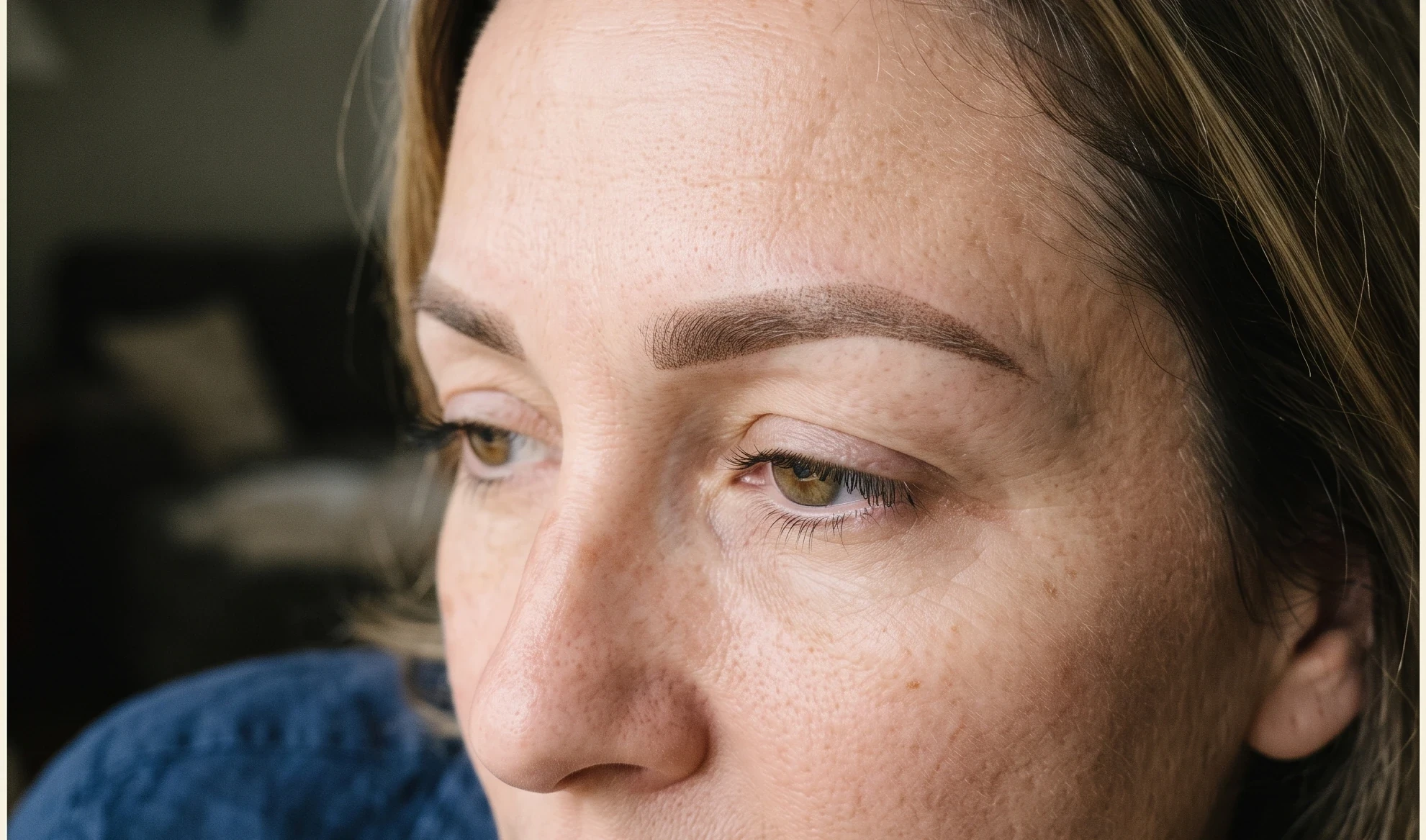 Cosmetic (permanent-makeup) tattooing on the face.
Why laser is the mainstay — and when saline is used instead
For clearing unwanted cosmetic pigment, laser is the primary method. Laser tattoo removal uses short, high-intensity light pulses to fragment pigment particles so the body's immune system can gradually clear them. It works across a wide range of pigment, it's well-documented, and dermatology bodies including the American Academy of Dermatology and Cleveland Clinic describe it as the standard approach; the clinical mechanism is covered in depth in StatPearls' laser tattoo removal reference.
The important exception is cosmetic pigment chemistry. Saline removal is a non-laser method in which a saline or lifting solution is tattooed into the skin to draw pigment up and out through the natural scabbing process. It's often chosen for fresh work, or where the pigment carries a real darkening risk — because heating iron oxide and titanium dioxide with a laser can make them turn darker rather than fade.
That risk has a name. Paradoxical darkening is when a cosmetic pigment turns grey, brown or black after a laser pulse instead of fading, because heat chemically reduces the iron oxides and titanium dioxide in it. The U.S. FDA's guidance on tattoos and permanent makeup flags that permanent-makeup pigments can react unpredictably to removal. Two rules follow, and neither is optional: demand a test patch on your actual pigment a few weeks ahead, and insist on a clinician with cosmetic-pigment experience. The test patch protects you — no laser removes the darkening risk on iron-oxide colours by itself.
You usually can't fix it overnight
This is the expectation that saves people the most heartache. Correcting botched PMU is a process measured in months, not a single appointment. Removal or lightening runs across multiple sessions spaced roughly 6–8 weeks apart (as of July 2026) so the skin can recover between treatments, and any corrective re-do only happens after that clearing is done and healed. A provider can estimate a session range after seeing the work and, ideally, after a test patch — but nobody honest promises a number in advance, because pigment depth, colour, age and your skin all drive it.
The upside of the slow path is control: fading gradually lets a corrective specialist judge, session by session, when the canvas is clean enough for a better result. Rushing — layering a cover-up over a fresh problem, or pushing sessions closer than the skin tolerates — is how a fixable situation becomes a harder one.
This is general information, not medical advice. Correction and removal outcomes and risks depend on your skin, your pigment and your health — consult a licensed, experienced provider, and never assume a guaranteed result.
Choosing a corrective specialist
The person you pick matters more than the machine they own. Look for someone whose experience is specifically in correction and removal, not only original PMU artistry — the skill sets overlap but aren't the same. A good corrective specialist will do a test patch, walk you through the fix-or-remove trade-offs plainly (including when not to colour-correct), and decline to guarantee a flawless outcome. Be wary of anyone who reaches for an immediate cover-up tattoo before discussing removal, or who sells only one method and frames it as the universal answer.
Ask three questions: What specific problem are we solving — colour, shape, placement or migration? Which route do you recommend and why not the others? And how does what you're proposing affect my options later? The answers tell you whether you're with a diagnostician or a salesperson.
Compare specialists near you — calmly
The right route is problem-specific, so the clinic is too. Compare clinics offering PMU correction and removal near you — filter by laser, saline, or picosecond and see who actually offers the approach your situation needs. Many list a free consultation: 1,525 of the clinics in our directory (27%) advertise one (as of July 2026), which makes it cheaper to get a second, neutral opinion before committing. If you're in a major metro, a dense market like Melbourne lets you compare a wide range of corrective providers before you book.
Whatever you're looking at in the mirror right now, the most useful next step isn't a decision — it's an unhurried assessment from someone who corrects this for a living. Most cases improve. Give yourself the test patch, the second opinion, and the time.
Frequently asked questions
What counts as botched permanent makeup?
Permanent makeup is usually called botched when it's too dark, the wrong shape or colour, noticeably asymmetric, migrated or blurred beyond its outline, or placed in the wrong spot. Any one of these can be a fair reason to correct it. Most cases can be improved — the right route depends on which problem you have and how set the pigment is.
Can botched permanent makeup be fixed or does it have to be removed?
Both are options. Partial removal can lighten and reshape work that's close but too dark or slightly off; full removal clears the canvas so a corrective artist can start over; colour-correction tattoos over the existing pigment. There's no single right answer — it depends on the specific problem, and a corrective specialist should assess it in person.
Does colour-correction over bad PMU make later removal harder?
It can. Layering corrective pigment over existing permanent makeup adds more ink — often pigments containing iron oxide or titanium dioxide — which can complicate or lengthen any future laser removal and, in some cases, raise the risk of paradoxical darkening. It's a real option, but treat it cautiously and ask how it affects removal later.
Why is laser the main method but saline sometimes used instead?
Laser is the mainstay because it targets a wide range of pigment and clears it through the body over multiple sessions. Saline (non-laser lifting) is often preferred where paradoxical darkening is a concern — because cosmetic pigments can darken under a laser — or on fresh work. A test patch helps decide which suits your pigment.
How long does it take to fix botched permanent makeup?
Usually longer than people hope — you generally can't fix it overnight. Removal or lightening takes multiple sessions spaced roughly 6–8 weeks apart to let skin heal, and any corrective re-do comes after that. Plan for months, not one appointment. A specialist can only estimate a range after seeing the work, ideally after a test patch.
Can a laser cause my permanent makeup to turn darker?
Yes — this is paradoxical darkening. Cosmetic pigments used in brows, eyeliner and lips often contain iron oxide and titanium dioxide, which can chemically change under laser heat and turn grey, brown or black instead of fading. It's documented and is exactly why a test patch on your actual pigment is essential before treating the whole area.
How do I choose a specialist to correct botched PMU?
Look for someone with specific corrective and removal experience — not only original PMU artistry — who will do a test patch, explain the fix-or-remove trade-offs honestly, and won't guarantee a perfect result. A provider comfortable referring you for removal before a re-do, rather than tattooing over the problem immediately, is usually the safer choice.
Is it normal to feel upset about botched permanent makeup?
Completely. It's on your face, and distress is a normal reaction, not an overreaction. The reassuring part is that most cases improve with the right corrective route, even if it takes patience. Get a calm, in-person assessment from a corrective specialist before making any decision, and don't rush into a same-day cover-up out of panic.
Related guides
Related Guides
- Cosmetic & PMU
Why Permanent Makeup Fades (and Turns Orange or Grey) (2026)
Why permanent makeup fades and shifts colour, explained neutrally: shallow pigment placement, iron-oxide oxidation, sun exposure and skin turnover, why warm browns…
- Cosmetic & PMU
How to Remove Permanent Makeup to Redo It: Lighten vs Remove (2026)
How to remove permanent makeup to redo it: partial lightening vs full removal, why saline is often preferred pre-redo, and how much fading is enough.
- Cosmetic & PMU
Removing Old or Faded Permanent Makeup
How to remove old or faded permanent makeup, explained neutrally: why aged PMU turns orange, grey or dark, the paradoxical-darkening trap, saline vs laser, sessions…